
Enterprise Web Development Solutions for Scalable Digital Operations
Building sophisticated web platforms that support complex business operations requires architectural precision and strategic technical planning. Organizations require digital infrastructure capable of handling substantial traffic volumes, integrating with existing enterprise systems, and adapting to evolving market demands.
Modern enterprise web development extends beyond visual presentation to encompass performance optimization, security hardening, seamless third-party integrations, and future-proof scalability. Technical architecture decisions made during initial development phases directly impact long-term operational efficiency and total cost of ownership.
Core Development Capabilities
Custom Web Application Architecture
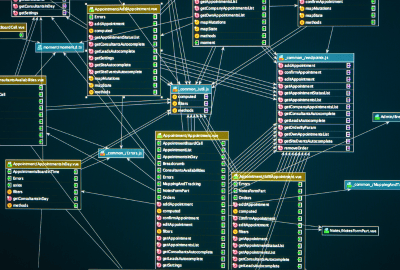
Designing bespoke web applications aligned with specific operational requirements and business logic. Development methodologies prioritize modular architecture, enabling independent scaling of components based on usage patterns and performance requirements.
Technical implementation encompasses front-end frameworks including React, Next.js, and Vue.js paired with robust back-end infrastructure utilizing Node.js, Python, or PHP. Database architecture selection considers data structure complexity, query performance requirements, and scaling projections.

Enterprise Content Management Systems
Implementing headless CMS platforms that separate content management from presentation layers, providing flexibility across multiple digital channels. Composable architecture approaches enable organizations to select optimal tools for each operational component while maintaining system cohesion.
Platform expertise includes both proprietary systems and open-source solutions, customized to accommodate complex workflows, approval hierarchies, and multi-regional content distribution requirements.

Progressive Web Application Development
Constructing PWAs that deliver native application experiences through web browsers, eliminating platform-specific development costs while maintaining offline functionality. Service worker implementation ensures reliable performance regardless of network conditions.
Progressive enhancement strategies guarantee baseline functionality across all devices while leveraging advanced capabilities on modern platforms. This approach maximizes audience reach without compromising user experience quality.

E-Commerce Platform Engineering
Developing comprehensive commercial platforms with advanced inventory management, payment gateway integration, and order fulfillment automation. Architecture supports high transaction volumes while maintaining PCI compliance and data security standards.
Custom checkout flow optimization, product recommendation engines, and customer relationship management integration create cohesive commercial ecosystems that drive revenue growth and customer retention.
Core Development Capabilities
Microservices Architecture
Decomposing monolithic applications into independent service components that can be developed, deployed, and scaled independently. This architectural pattern enhances system resilience by isolating failure domains and enables technology diversity across services.
Container orchestration using Kubernetes or similar platforms manages service deployment, scaling, and health monitoring. API gateway implementation provides unified access control and request routing across distributed services.
Cloud-Native Infrastructure
Leveraging cloud computing platforms for elastic scalability, geographic distribution, and operational resilience. Infrastructure-as-code practices ensure reproducible deployments and version-controlled configuration management.
Multi-region deployment strategies minimize latency for global user bases while providing disaster recovery capabilities. Auto-scaling policies optimize infrastructure costs by matching resource allocation to actual demand patterns.
Performance Engineering
Implementing comprehensive optimization strategies including content delivery network integration, database query optimization, asset compression, and lazy loading techniques. Performance budgets establish measurable targets that guide development decisions.
Server-side rendering and static site generation approaches reduce time-to-interactive metrics while improving search engine indexability. Continuous performance monitoring identifies degradation patterns before they impact user experience.
Security & Compliance Framework
Enterprise applications require multi-layered security architectures addressing authentication, authorization, data encryption, and vulnerability management. Implementation includes SSL/TLS certificate management, Web Application Firewall configuration, and regular security auditing protocols.
Compliance with regulatory frameworks including GDPR, HIPAA, or industry-specific requirements ensures legal adherence while protecting sensitive organizational and customer data. Regular penetration testing and code security reviews identify vulnerabilities before production deployment.
Integration & Interoperability

Enterprise System Connectivity
Establishing bidirectional data flows between web platforms and existing enterprise systems including ERP, CRM, accounting software, and legacy databases. RESTful API development and middleware implementation ensure reliable data synchronization.
Event-driven architecture patterns enable real-time updates across connected systems without creating tight coupling dependencies. Message queue implementation provides asynchronous processing capabilities for resource-intensive operations.
Third-Party Service Integration
Incorporating specialized services for payments, communications, analytics, marketing automation, and customer support. Vendor-agnostic integration strategies prevent platform lock-in while maintaining operational flexibility.
Webhook implementation enables event-based automation across connected platforms. API versioning strategies ensure backward compatibility as integrated services evolve.
Strategic Planning & Requirements Analysis
Comprehensive discovery processes map existing workflows, identify optimization opportunities, and establish measurable success criteria. Technical feasibility assessments evaluate architectural options against budget constraints and timeline requirements.
Stakeholder workshops align organizational objectives with technical capabilities, ensuring delivered solutions address actual business needs rather than perceived requirements.
Development Methodology & Process
Iterative Development & Quality Assurance
Agile development methodologies deliver working software incrementally, enabling stakeholder feedback integration throughout the development lifecycle. Continuous integration pipelines automate testing, reducing defect rates while accelerating delivery timelines.
Multi-device testing protocols verify functionality across browsers, operating systems, and screen sizes. Automated regression testing prevents feature degradation as platforms evolve.
Deployment & Post-Launch Optimization
Staged deployment strategies minimize risk by releasing updates to user subsets before full production rollout. Blue-green deployment approaches enable instant rollback if issues emerge.
Post-launch monitoring tracks user behavior patterns, performance metrics, and error rates. Analytics-driven optimization cycles continuously refine user experiences based on observed behavior rather than assumptions.
Industry-Specific Applications

Educational Institutions
Student portals, learning management systems, enrollment platforms, alumni networks

Healthcare Organizations
Patient portals, telemedicine platforms, appointment scheduling, medical record systems

Manufacturing Enterprises
Supplier portals, inventory management, production tracking, quality assurance systems
Business Outcomes & Value Delivery
Organizations implementing modern web architectures experience measurable improvements including reduced operational costs through automation, enhanced customer satisfaction via improved user experiences, increased revenue through optimized conversion funnels, and accelerated time-to-market for new capabilities.
Scalable infrastructure accommodates business growth without requiring complete platform rebuilds, protecting technology investments while supporting long-term strategic objectives.
Engagement Structure
Consultation processes assess current digital infrastructure, identify improvement opportunities, and develop prioritized implementation roadmaps. Transparent project scoping establishes realistic timelines, resource requirements, and investment levels required to achieve defined objectives.


